Entry of
Adult Singing in Washington, D.C.: How It Works
How adult vocal jazz and choral singing works in Washington, D.C., from section blend to rehearsal calendars and voice care across a season.
ResearchMoney11 min read
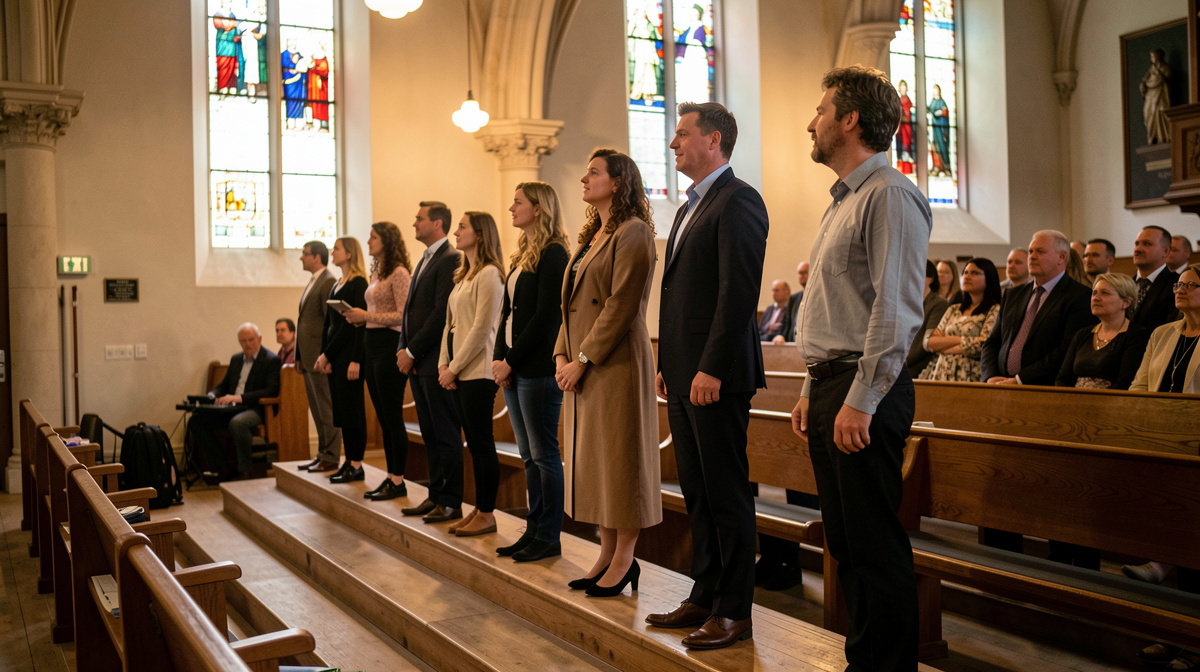
Adult singing in Washington, D.C. runs on a small set of habits rather than raw talent. A singer joins a section, learns to tune a chord with the scores down, and keeps the voice healthy between rehearsals. The city has enough ensembles that an adult who decided to sing now, rather than at nineteen, can find a room within a few weeks.
What does adult group singing actually involve?
Group singing is a set of small disciplines. A singer arrives knowing the notes, then spends rehearsal on blend, vowel shape and breath. Sections sit together, listen across the row, and adjust until the chord locks. A mixed choir on risers during an evening rehearsal is doing exactly this work, not performing.
The vocabulary is specific. Blend, balance, tessitura, passaggio, cut-off, diphthong. None of it is decorative. Each term names something a singer has to control in real time, and each one is taught rather than assumed. Ensembles in the District generally place new adults by voice part and range, then let the section absorb them over a few weeks.
Rehearsals follow a calendar. Most groups run a season of eight to fourteen weeks, with a break, then a new cycle. Attendance matters more than it looks: a missing alto changes the chord the rest of the section hears. Singers who travel for work often ask about the calendar before they ask about the repertoire.
Where do adults sing in the District?
Options fall into a few broad types. Community choruses rehearse weekly and perform two or three times a year. Church and synagogue choirs sing on a liturgical calendar and often rehearse midweek. Vocal jazz ensembles are smaller, usually eight to sixteen singers, and work with a rhythm section. Workplace and alumni groups sit somewhere between a club and a chorus.
Auditions vary. Some groups accept singers on a short range check and a pitch exercise. Others ask for a prepared piece and a sight-reading sample. A few are fully open and place singers by section need. The practical difference is rehearsal pace, not prestige.
Costs are modest. Dues, music rental and a concert outfit are the usual line items. Travel within the city is the larger commitment, since most rehearsals sit in the evening and venues spread across the District and its close suburbs. A journal on adult vocal jazz and choral singing in Washington, D.C. tracks this landscape in plain language, including where adults sing and how a season is structured.
How does a section build vocal blend?
A section that sounds like one voice is not an accident, and it is rarely the work of one strong singer. Blend comes from matched vowels, matched dynamics and matched timing. Three habits do most of the work.
First, the section agrees on the vowel before the note. Singers who shape the same vowel produce a narrower, more focused sound, and tuning improves as a side effect. Second, the section rehearses with the scores down once the notes are secure. Removing the paper forces listening, and listening is what blend is made of. Third, the section marks its own cut-offs. A consonant that lands together reads as precision; one that spreads reads as hesitation.
Section leaders often record a rehearsal and send it out. Singers who practise against that recording between sessions arrive already tuned to the group. This is the single cheapest improvement available to an adult ensemble.
How does a voice stay healthy across a season?
A season is a load, and the voice responds to load like a muscle. Three things matter most: hydration, warm-up and recovery.
Hydration is unglamorous and effective. Water through the day supports the vocal folds, and alcohol and heavy caffeine before a rehearsal work against them. A warm-up of ten to fifteen minutes, starting on a hum or a lip trill and moving into the range the repertoire demands, prepares the voice for the register shifts a piece will ask for.
Recovery is the part adults skip. After a long rehearsal or a concert, the voice needs a quiet day. Singers who talk over a loud room after a performance often pay for it the following week. A short cool-down, humming in a comfortable range, helps the folds return to rest.
Persistent hoarseness that lasts more than two weeks is a reason to see a doctor, not to push through. Teachers and coaches in the District generally say the same thing: the voice is durable, but it is not indestructible, and it rewards consistency more than intensity.
What changes when an adult starts or returns to singing?
An adult beginner brings two advantages and one problem. The advantages are motivation and a trained ear from years of listening. The problem is comparison, usually against a version of the self that never existed.
Adults learn faster than they expect in some areas and slower in others. Reading music takes time. Pitch matching, for most people, improves within weeks. Range and stamina build over months. A first lesson for someone who came to singing as an adult is usually about placement, breath and a realistic plan, not about talent assessment.
Returning singers face a different task. The voice has changed since school, often lower and heavier, and the old habits may no longer fit. Rebuilding takes a season, sometimes two. Groups that place adults by current range rather than remembered range make this easier.
Can you practise without a piano or a teacher?
Yes, and the method is simple. A singer can rehearse a part against a recording, a drone or a phone app that holds a pitch. The goal is not volume but accuracy: sing the line slowly, check the tuning against the reference, then repeat at tempo.
Three exercises cover most of the ground. Sustained notes on a single vowel build breath control. Stepwise patterns in the part's tessitura build familiarity with the line. Silent score study, marking breaths and difficult intervals, builds the map that makes rehearsal efficient.
What a singer cannot do alone is hear the chord. That requires other voices, which is why weekly rehearsal remains the core of adult singing. Between rehearsals, the work is maintenance: keep the instrument warm, keep the part in the ear, and arrive ready to listen.
How do vocal jazz ensembles differ from a chorus?
A vocal jazz ensemble is smaller and more exposed. With eight to sixteen singers, each voice is audible, and the section cannot hide behind numbers. Repertoire leans on close harmonies, extended chords and rhythm that shifts under the singers.
Microphones change the technique. A jazz singer works closer to the mic, uses less volume and relies on articulation and timing. Improvisation may be part of the job, though many ensembles keep it to a soloist or two per set. The rehearsal culture is similar to a chorus: blend first, then interpretation.
For an adult deciding where to sing, the choice usually comes down to room size and repertoire. A chorus offers a large sound and a forgiving blend. A jazz ensemble offers detail and a steeper learning curve. Both run on the same fundamentals: breath, tuning, listening and showing up.